Relationships, Trust and Market Presence: Lessons from Latin America and the Caribbean for Global Business
Reflections from the Ireland - Latin America & Caribbean Trade Horizons Forum on international partnerships, sustainability, leadership, resilient supply chains, and the growing importance of Latin America in the global transition economy.
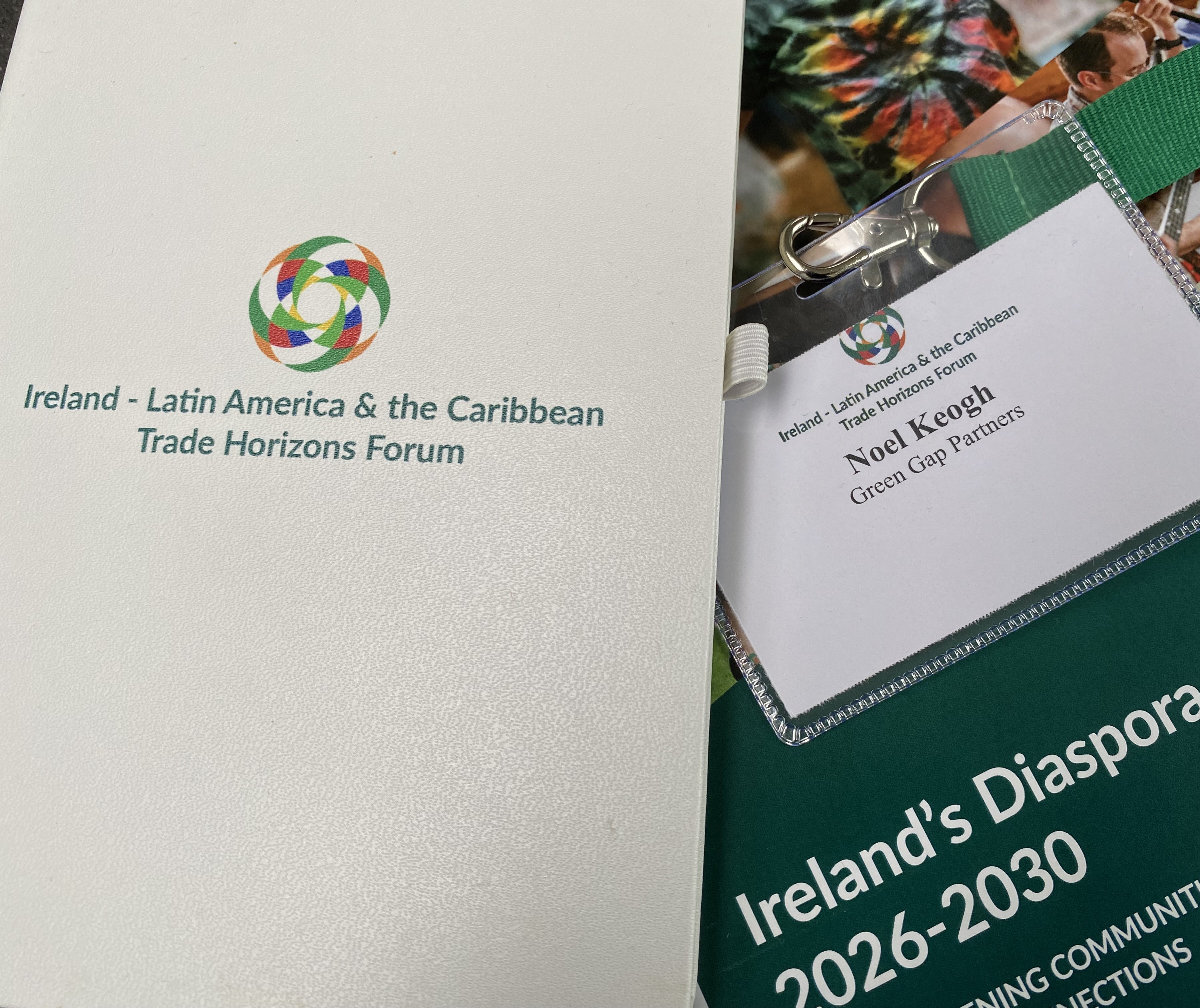
Over the past week, I have been thinking about the discussions and themes that emerged during the Ireland - Latin America & Caribbean Trade Horizons Forum in Dublin. While the conference explored topics ranging from trade and investment to AI, sustainability, geopolitics, and innovation, a common message throughout the day was ultimately a very human one.
In an increasingly uncertain global environment, long-term business success still depends heavily on trust, relationships, local understanding, and being present in the market.
For organisations looking to build partnerships, expand operations, or invest across Latin America and the Caribbean, several themes stood out clearly.
Trade Agreements Enable Business - But Relationships Drive Growth
One of the key takeaways from the conference was that trade agreements alone do not create commercial relationships.
What they do provide is the framework and enabling environment that makes trade and investment easier, reducing friction and creating greater confidence for businesses and investors.
However, successful market engagement in Latin America and the Caribbean continues to rely heavily on factors such as trust, long-term relationships, local market understanding, execution capability, and sustained commitment.
There is often a tendency to view trade agreements as the destination. In reality, they are the infrastructure that supports deeper commercial engagement.
The organisations that succeed across the region are typically those willing to invest time and energy into understanding markets beyond the contractual and regulatory framework.
Why Local Market Presence Still Matters in Latin America
Another recurring theme throughout the conference was the importance of physical presence and proximity to the market.
While digital connectivity and virtual working have transformed international business, speaker after speaker reinforced that relationships across Latin America and the Caribbean are still built through consistency, trust, and engagement over time.
Having local partners, regional leadership capability, access to local talent, cultural understanding, and people close to the customer often makes the difference between superficial market engagement and long-term success.
The phrase “boots on the ground” surfaced repeatedly during discussions.
This is particularly relevant at a time when geopolitical uncertainty, supply chain disruption, and economic fragmentation are forcing organisations to rethink how and where they operate.
The businesses building resilient and future-focused value chains are often those investing in trusted local ecosystems rather than attempting to manage markets entirely remotely.
Trust and Relationships as Competitive Advantages
One of the strongest themes running through the forum was the strategic importance of relationships and trust.
There were notable similarities highlighted between Irish business culture and many Latin American and Caribbean markets, particularly around the value placed on personal trust, cultural understanding, long-term relationships, and reputation.
In many ways, these remain deeply relationship-driven markets.
The message was clear: before business partnerships become commercial, they often become personal.
That requires patience, consistency, credibility, and genuine engagement over time.
It also reinforces an important point sometimes underestimated by international organisations entering the region: this is not a short-term transactional environment.
Trust takes time to build, but once established, it can become a significant competitive advantage.
Sustainability and Decarbonisation as Drivers of Growth
Another theme that strongly resonated was the growing role of sustainability and decarbonisation in shaping future economic opportunity.
Discussions focused heavily on renewable energy, resilient supply chains, sustainable infrastructure, innovation-led growth, and the decarbonisation of traditional industries.
What was particularly interesting was that sustainability was increasingly framed not simply as compliance or risk mitigation, but as a driver of competitiveness, innovation, investment, and long-term economic growth.
For both Ireland and the Latin America and Caribbean region, this creates significant opportunities for collaboration.
The region’s natural resources, renewable energy potential, and growing innovation ecosystems position Latin America as an increasingly important partner in the global transition economy.
Multilateralism and International Cooperation Still Matter
Another important undercurrent throughout the day centred around the role of multilateralism and rules-based international cooperation.
For smaller economies and nations without the geopolitical leverage of larger powers, stable international frameworks remain critically important.
The conference reinforced the importance of long-term partnership approaches, institutional cooperation, economic diplomacy, and predictable rules of engagement.
In a more fragmented and uncertain global environment, these principles become increasingly valuable.
The Human Side of AI and Leadership
AI was naturally part of the conversation throughout the conference. What was refreshing, however, was that it was not the dominant theme.
Instead, much of the discussion remained focused on people, leadership, relationships, talent, and strategic execution.
AI was largely positioned as a productivity enhancer and strategic enabler rather than purely as a replacement for human capability.
The broader sentiment throughout the day was that judgement, adaptability, trust, and leadership remain central to long-term organisational success.
Many of these themes also reflect broader leadership and talent dynamics increasingly visible across sustainability, finance, development, and impact-focused organisations globally.
Latin America’s Competitive Advantage: Talent and Ambition
One of the most positive recurring themes throughout the forum was the recognition of the region’s talent base.
Speakers repeatedly highlighted the strong work ethic, entrepreneurial drive, adaptability, resilience, creativity, and problem-solving capability found across Latin America and the Caribbean.
Talent is clearly not a constraint within the region.
The challenge for many international organisations is often understanding how to engage effectively with local culture, build trusted relationships, and create environments where talent can thrive and contribute long term.
Focus on What You Can Control
Perhaps the most practical takeaway from the conference was also one of the simplest.
In a world shaped by geopolitical uncertainty, economic volatility, technological disruption, and supply chain fragmentation, organisations cannot control every external factor.
What they can control is:
the quality of their relationships
how well they understand customers and markets
the trust they build
the resilience of their partnerships and supply chains
the consistency of their long-term approach
That mindset may ultimately become one of the most important competitive advantages of all.
The strongest message from the Ireland - Latin America & Caribbean Trade Horizons Forum was not about short-term opportunity.
It was about long-term partnership.
And in an increasingly uncertain world, that may prove more valuable than ever.
About the Author
Noel Keogh is Founder of Green Gap Partners, a specialist executive search firm operating across sustainability and the green economy, development finance institutions, mission-driven organisations, and private sector impact.
If you are exploring leadership, growth, or market expansion across climate, finance, and impact sectors, I would welcome the opportunity to connect and exchange perspectives.